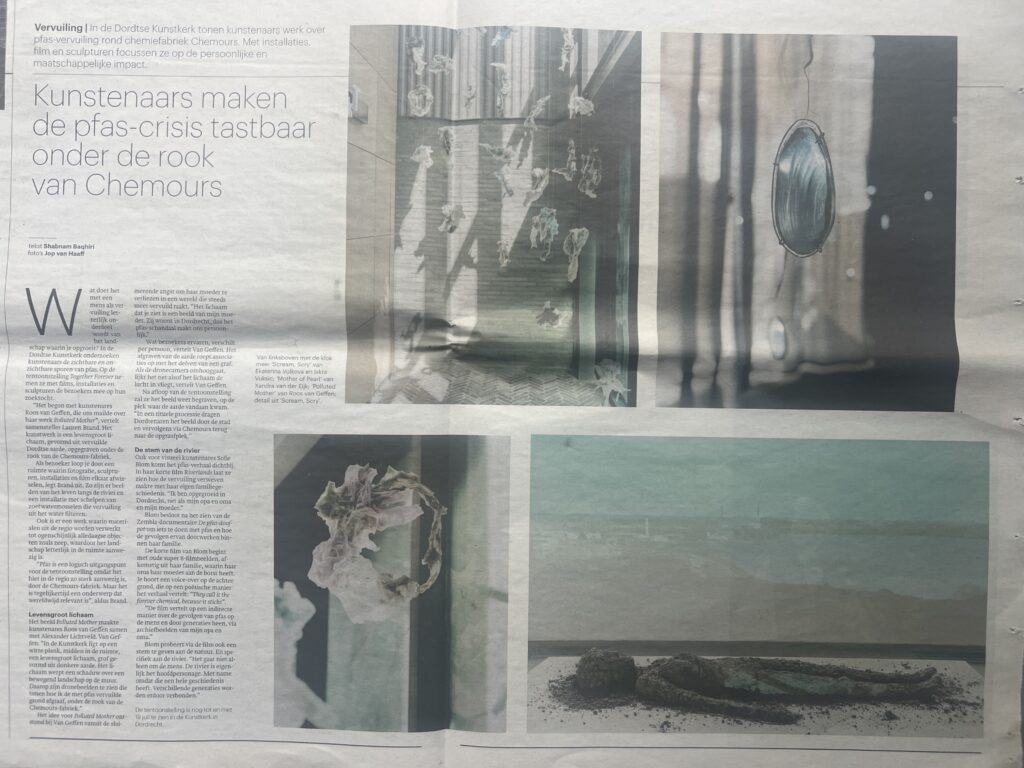
Polluted Mother 2026

Polluted Mother
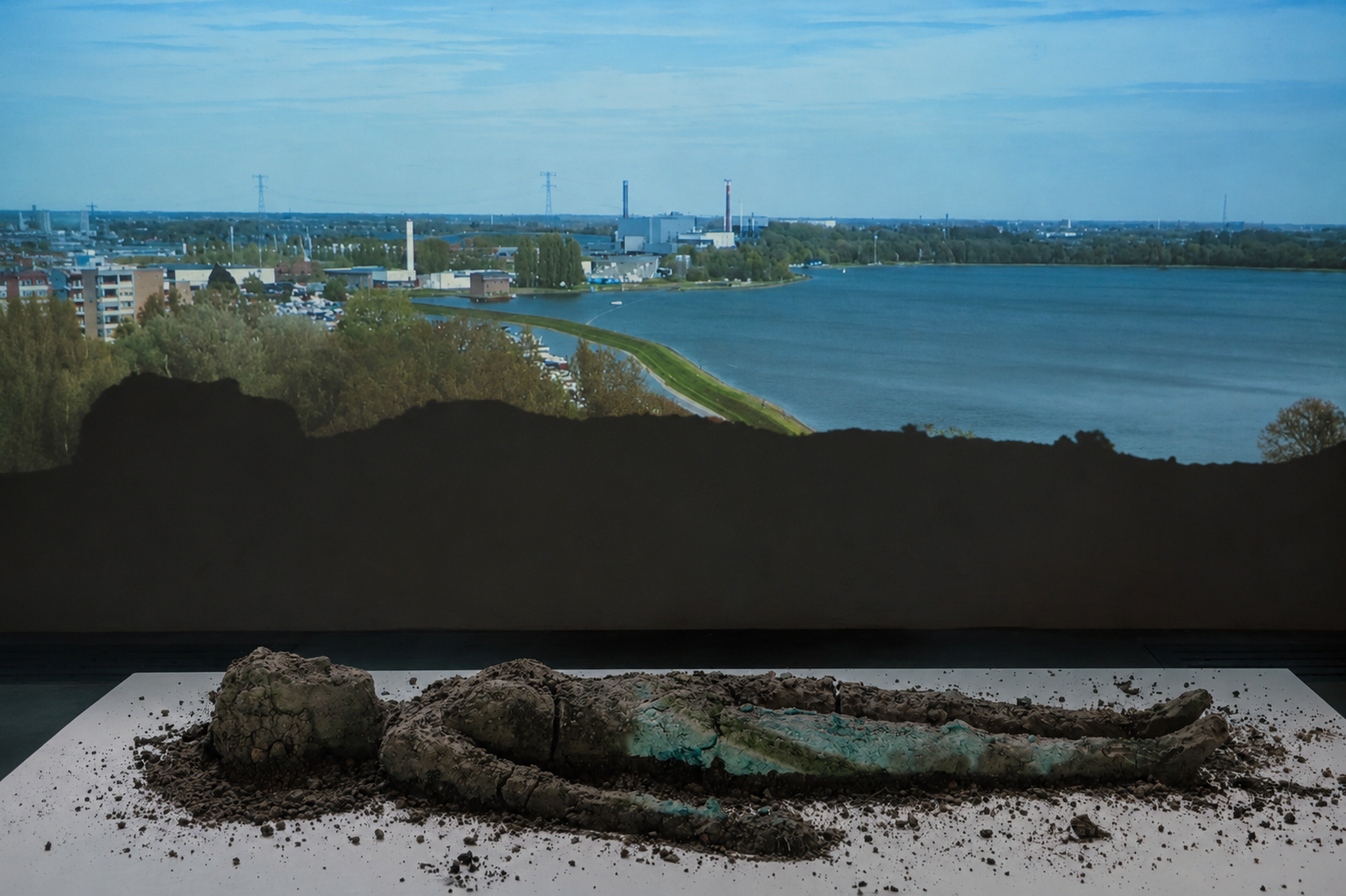
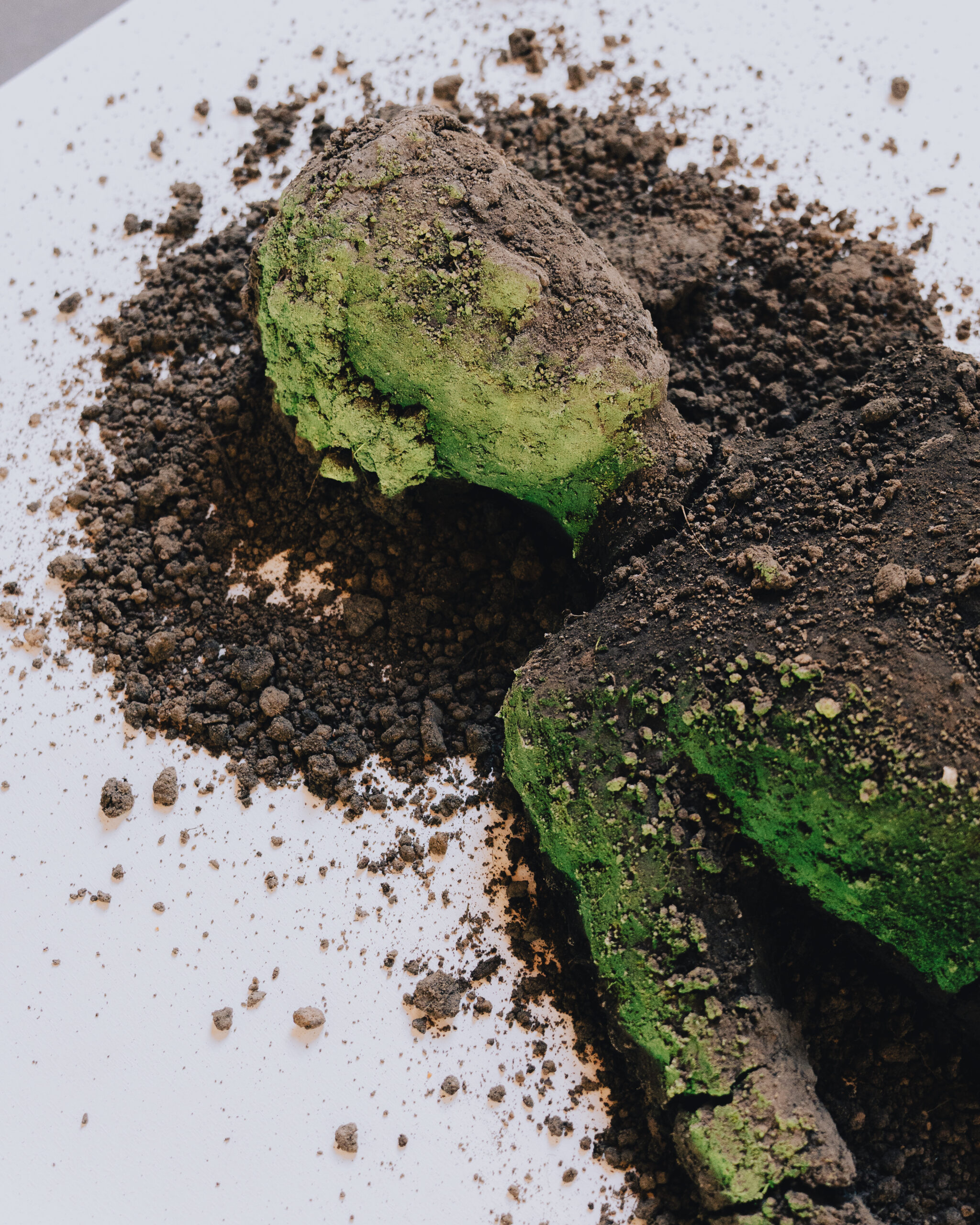
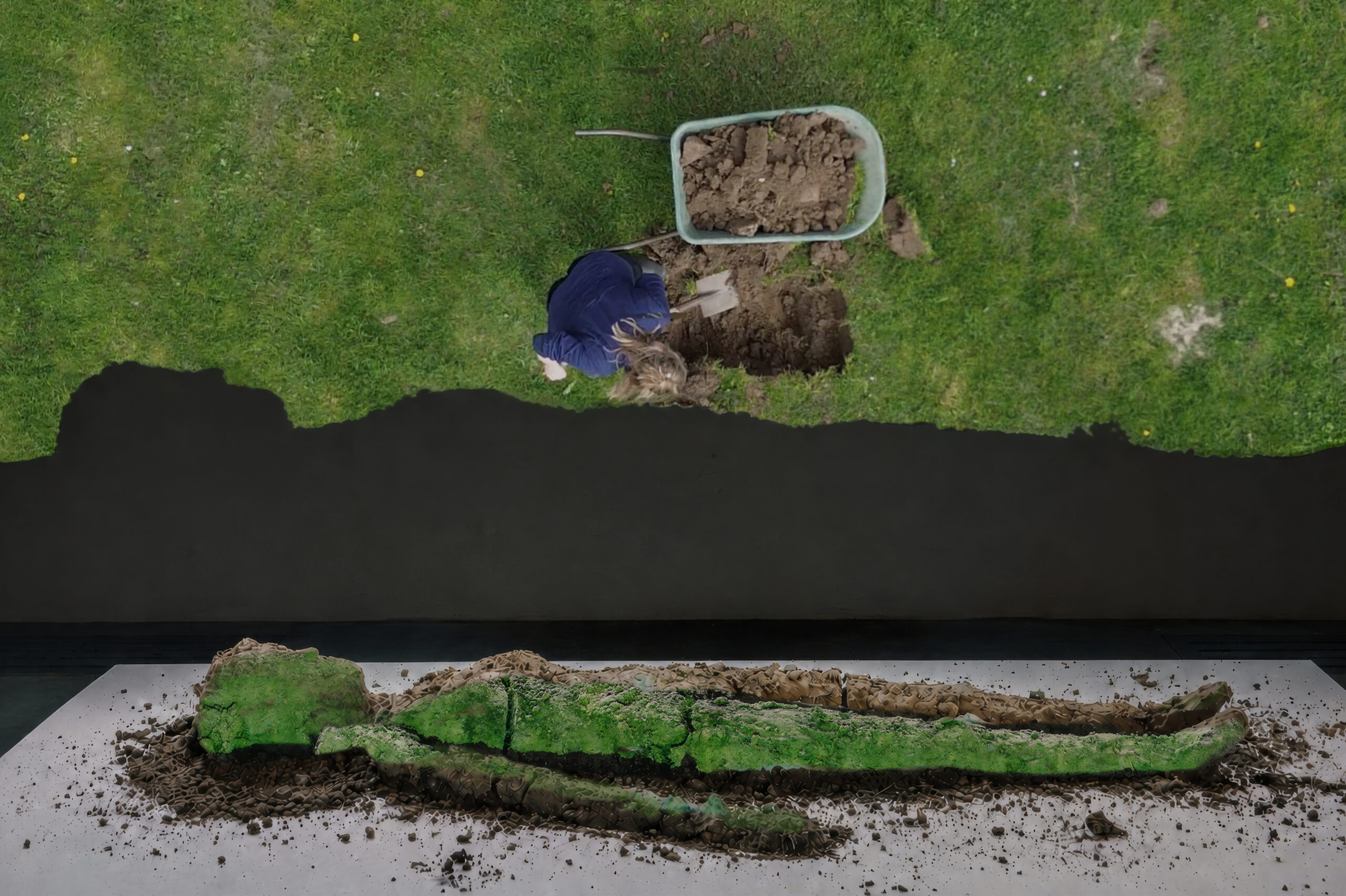
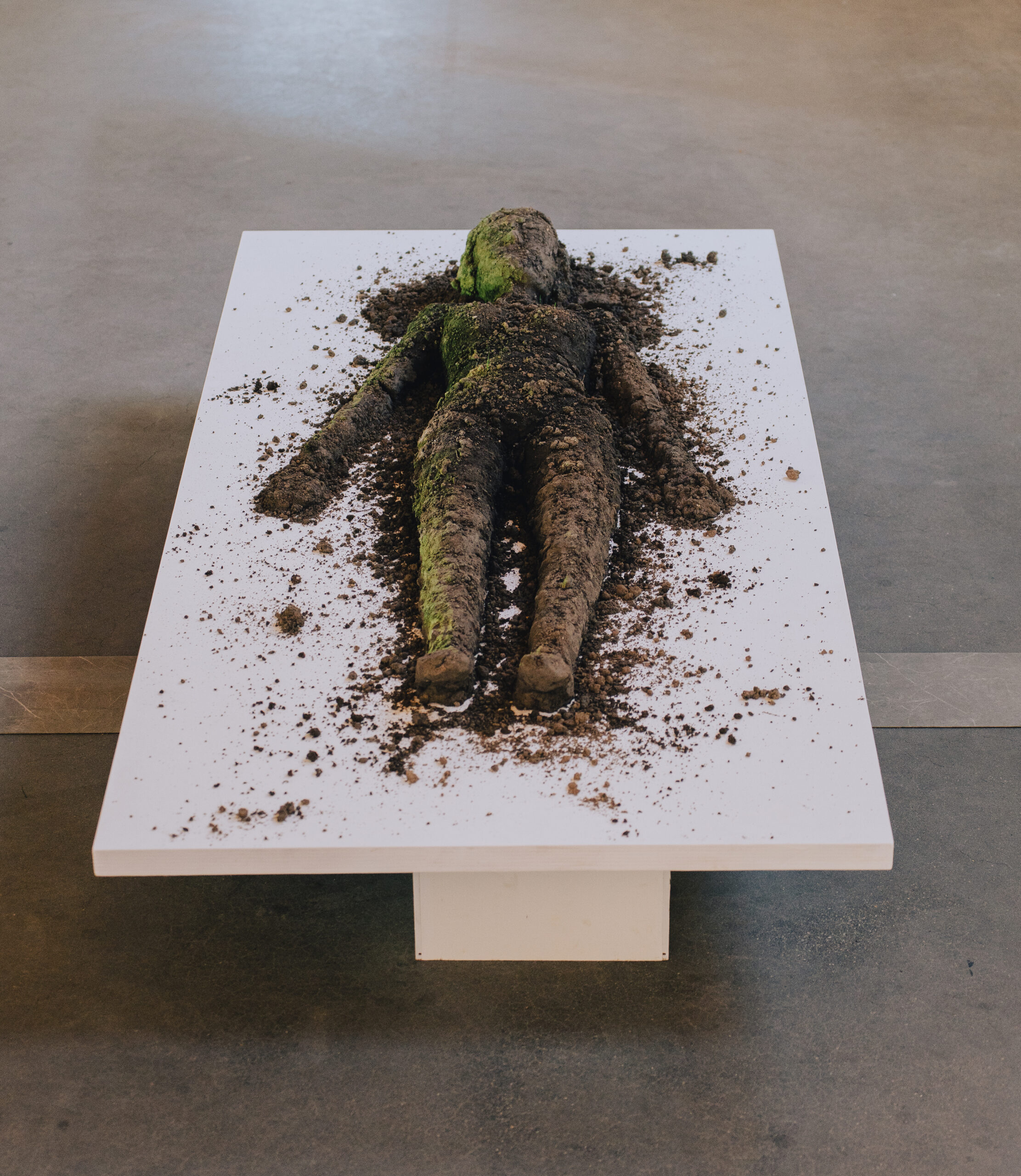
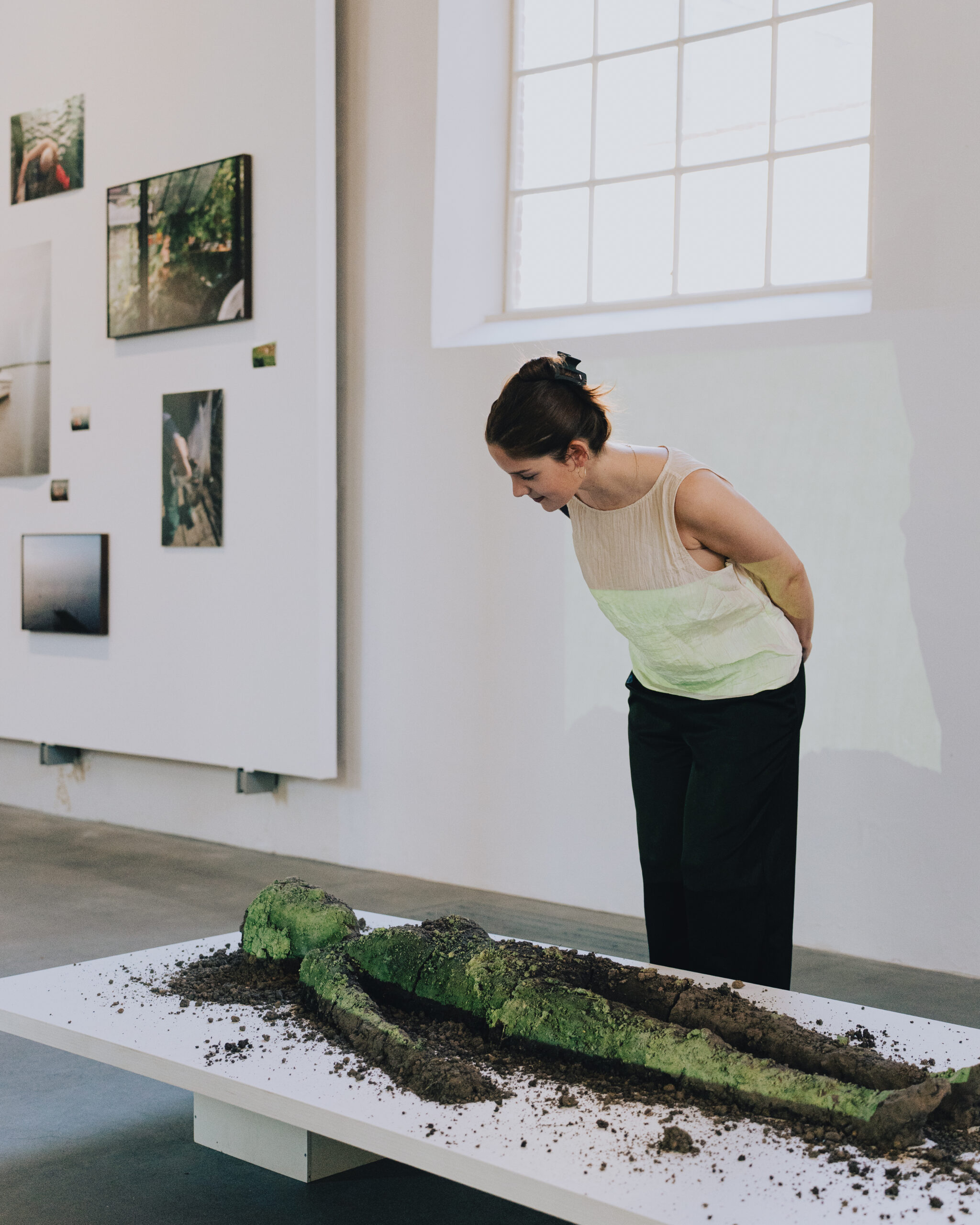
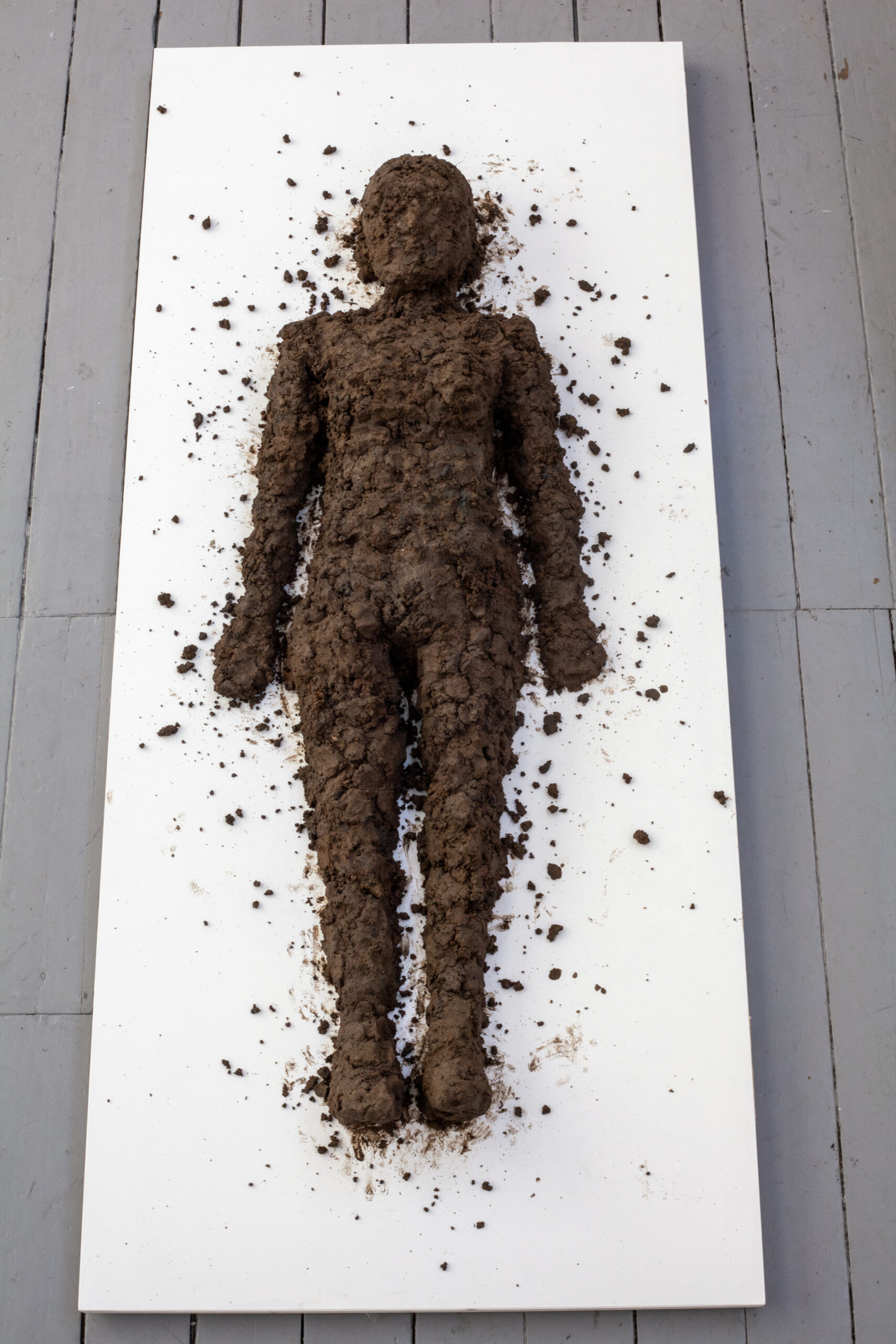
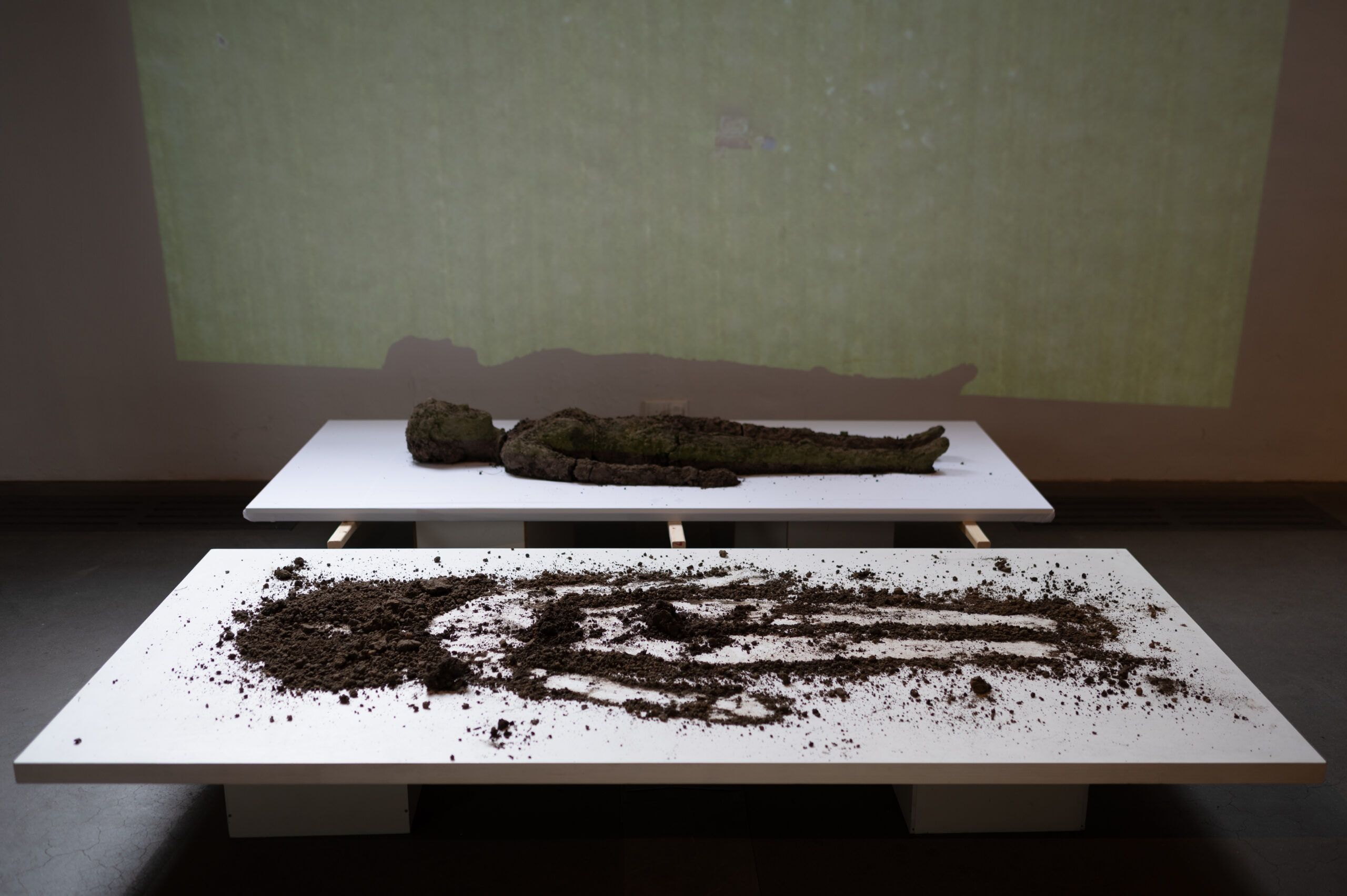
Unfired clay, wood, video in loop 9’17”, 220cm x 101cm
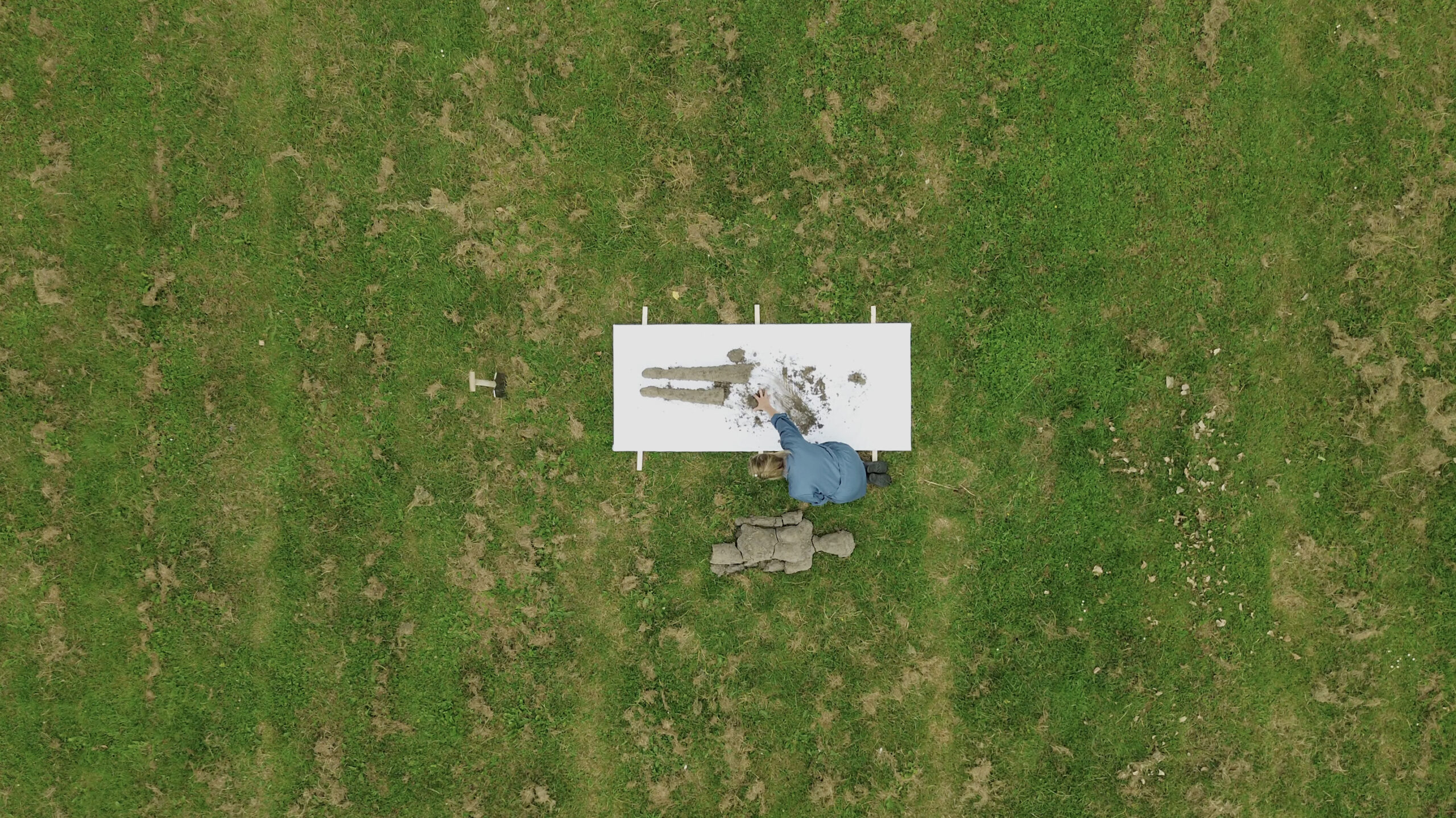
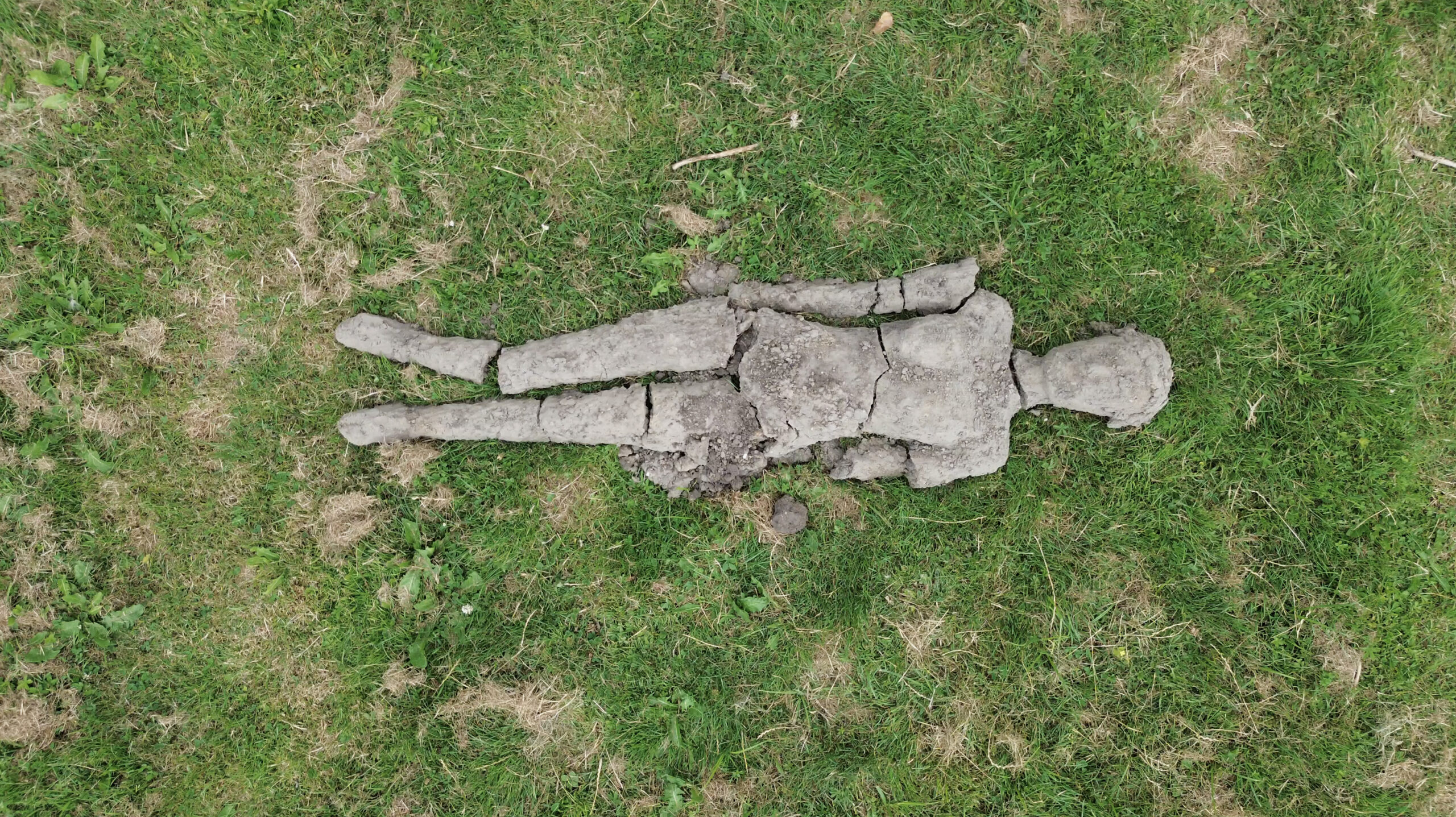
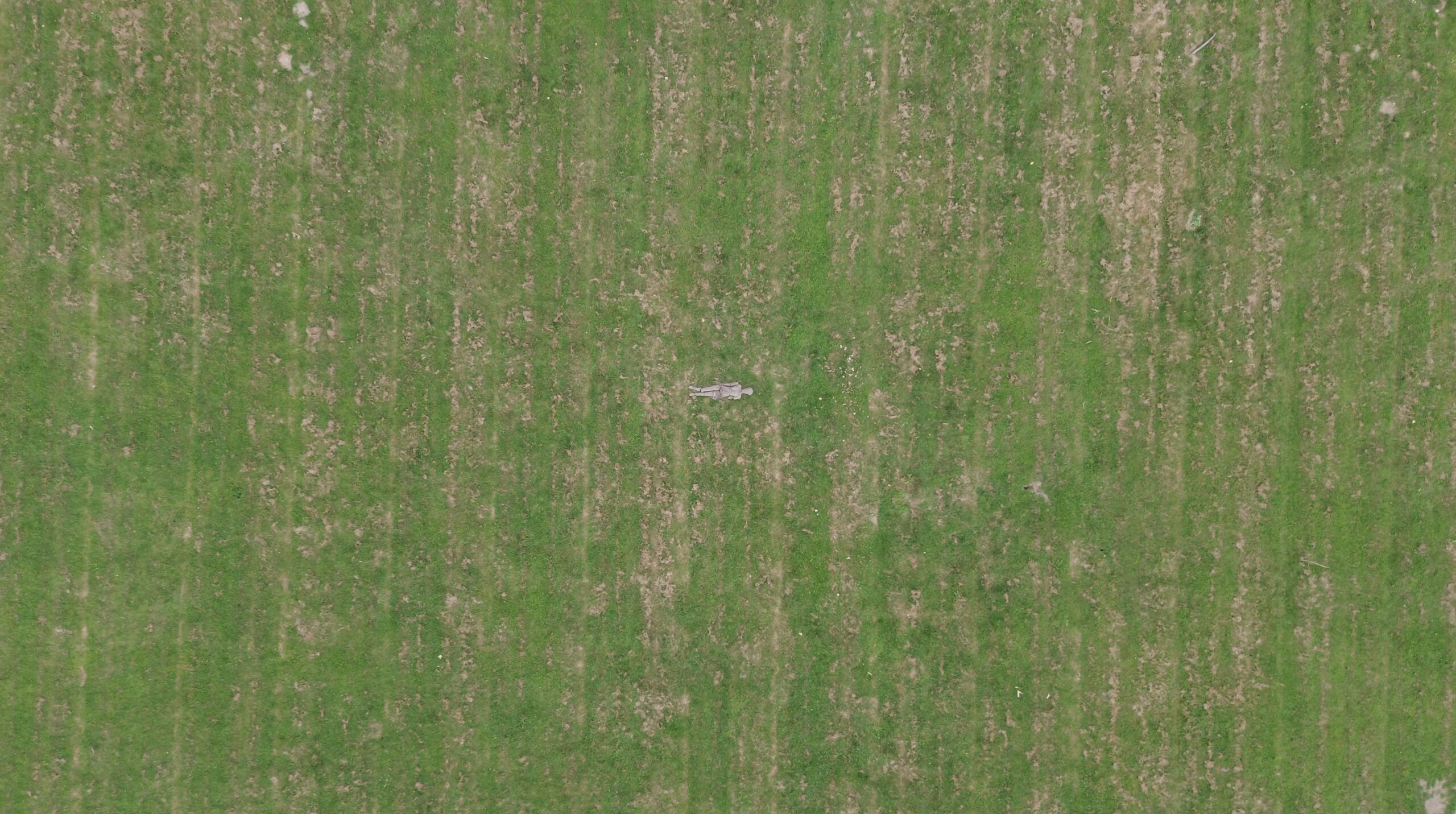
A life size body lies still in front of a moving landscape. The body is shaped from Dordrecht soil contaminated with PFAS, dug up under the smoke of the Chemours factory. The artist’s mother modeled for the sculpture and lives in Dordrecht. The body casts a shadow over the film projection on the wall: these are looped drone images showing Roos van Geffen digging up soil contaminated with PFAS, under the smoke of the Chemours factory. The camera zooms in on the digging, then zooms out and tilts toward the Chemours factory on the other side of the water, over and over again. As the drone camera rises, it looks as if the shadow body is flying into the sky.
Polluted Mother is a poetic protest against pollution, while at the same time being about care, legacy, and the eternal movement of life and death. The sculpture was made together with sculptor Alexander Lichtveld. On display at the exhibition Together Forever, 9 artists reflecting on PFAS pollution, Kunstkerk Dordrecht April 26th-july 19th 2026.
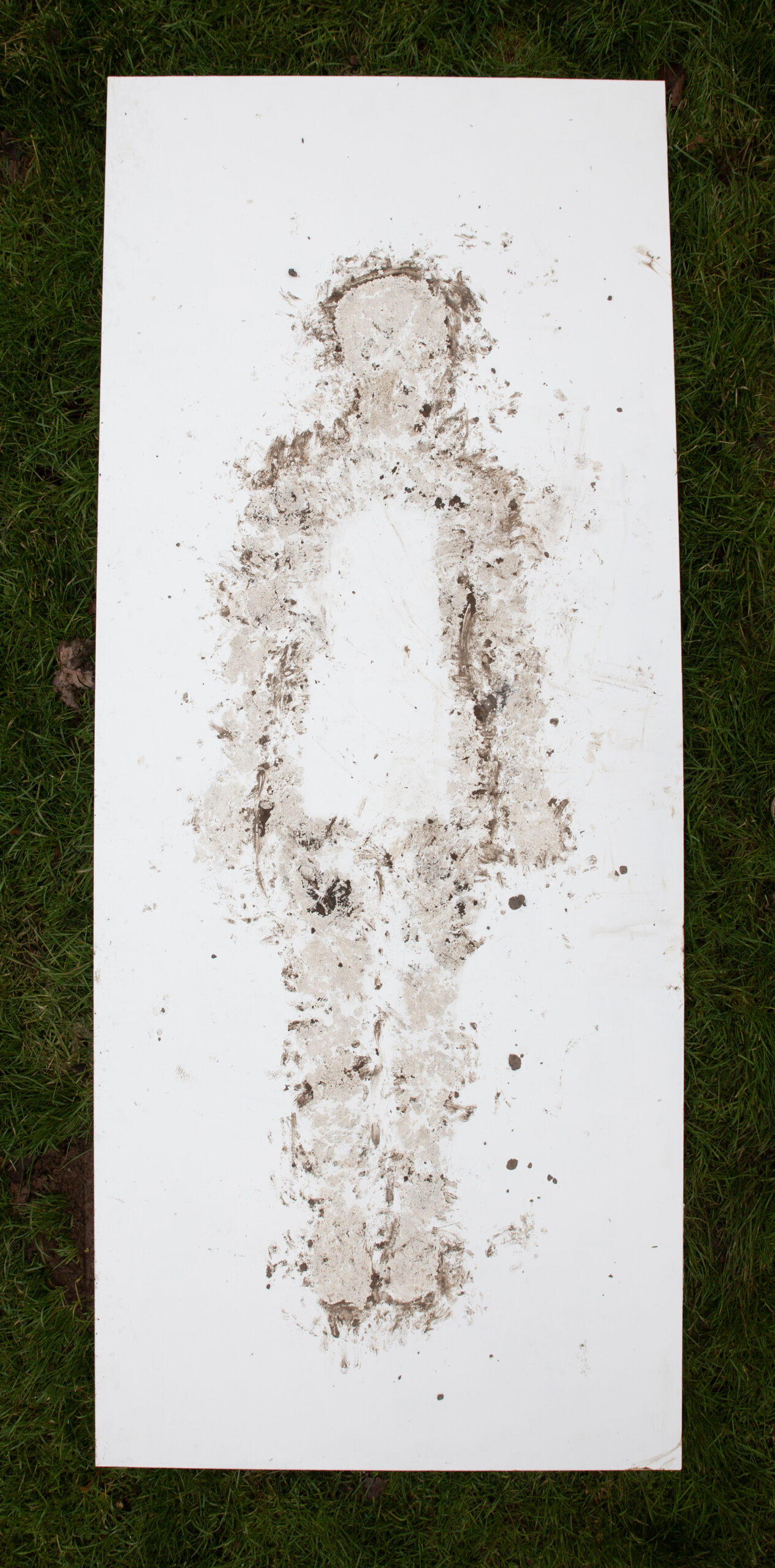
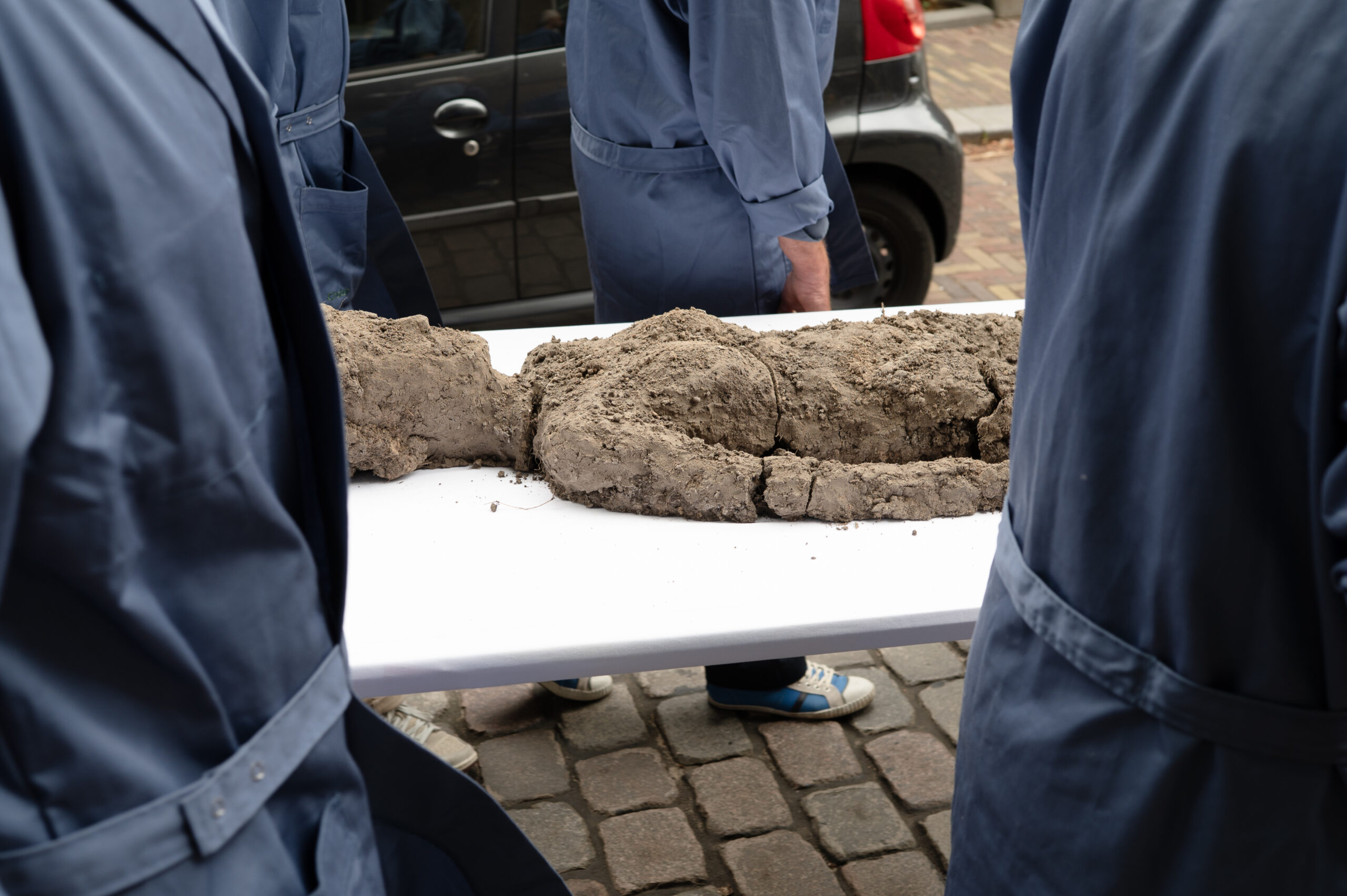
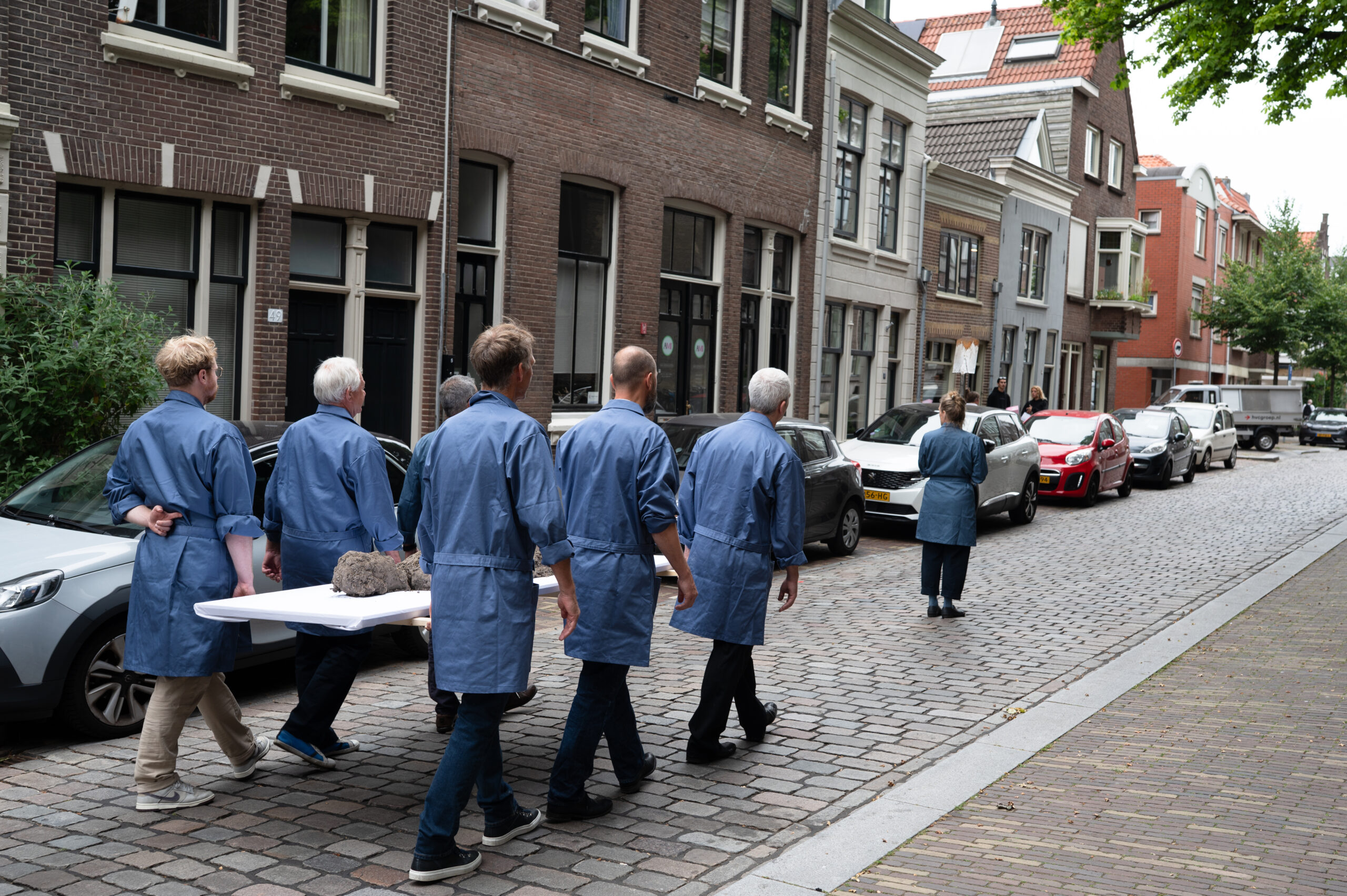
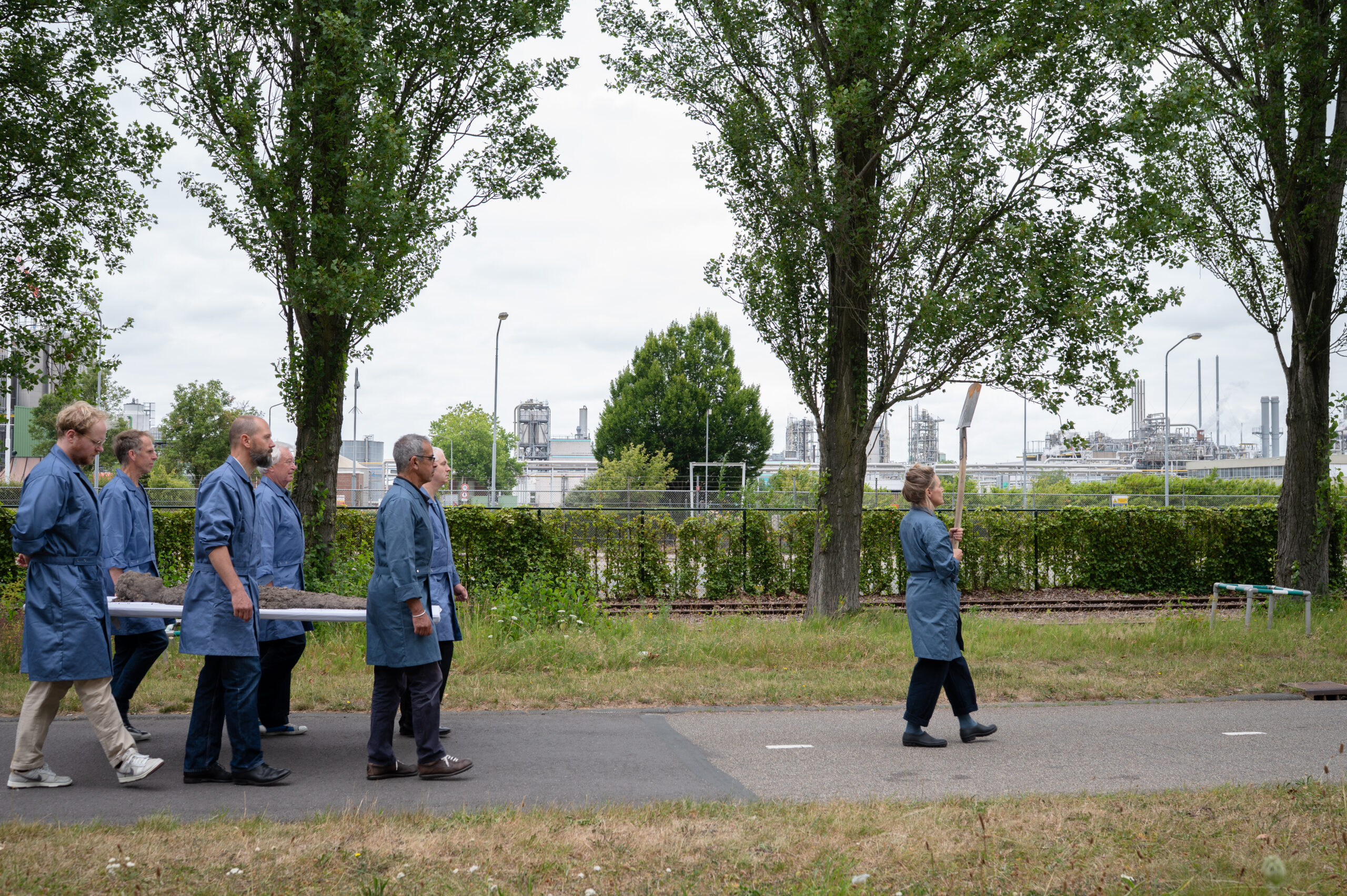
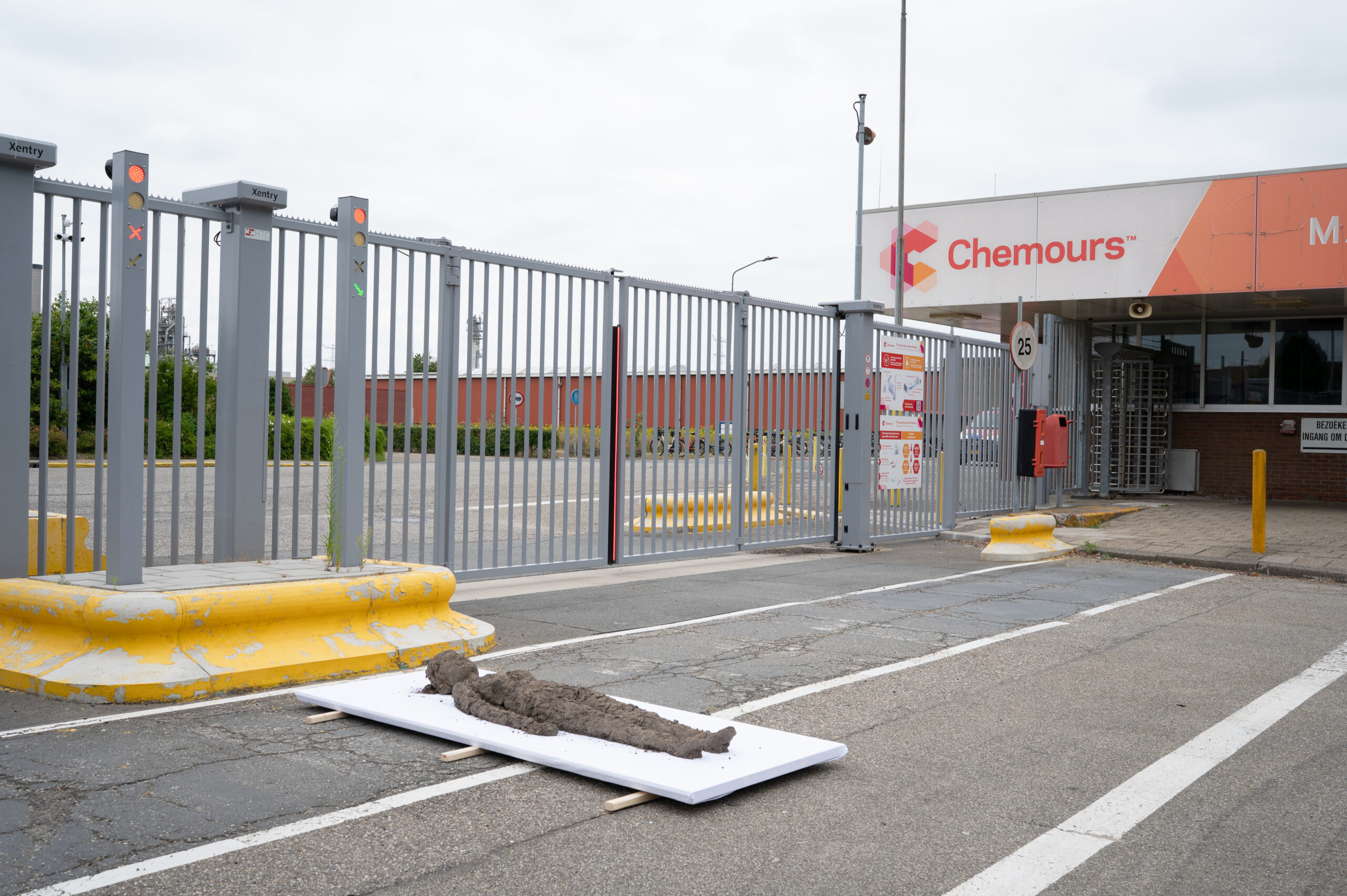
At the end of the exhibition, the sculpture Polluted Mother was carried through the city in a ritual procession by residents of Dordrecht. Via the Chemours chemical factory, we brought the sculpture back to the place where the polluted earth had come from.
Roos van Geffen: “The idea for Polluted Mother emerged in December 2023, from conversations with my mother about the PFAS pollution in Dordrecht, at a time when this issue was gaining greater national urgency through research into contaminated eggs. For decades, the chemical company Chemours illegally discharged the hazardous substance PFAS into the Merwede river near Dordrecht. Local residents, including my mother, can no longer eat eggs or vegetables from the area; some people are severely ill or have reduced fertility, and even breast milk from mothers in Dordrecht contains elevated concentrations of PFAS. Awareness of how harmful PFAS is has grown in recent years, including my own.
I carried out artistic research into the pollution caused by Chemours, exploring polluted sites, vegetable gardens, playing fields, and backyards, and documented them through photography and video. I collected polluted soil and experimented with it. This process led to the sculpture with video Polluted Mother.
I have increasingly felt, over the past while, that my mother’s life is finite; she is growing older, and as I was digging up the earth, I felt this in its entirety: that at some point in the coming years, I will be standing at her grave. I hope that the viewer does not merely observe, but that the work sets something in motion and touches deeper layers. That could be discomfort, or powerlessness, or perhaps grief. Because our mortality, and more specifically the enormous damage to health caused by PFAS pollution, is confronting once you delve into it. At the same time, it can resonate with one’s own fears and memories, and with how trauma passes from generation to generation.”
Made with grateful support from: my mother, Alexander Lichtveld, Kunstkerk Dordrecht, Pictura Dordrecht (where an earlier version of the sculpture was on display in 2024), Dimitri Tuinstra.
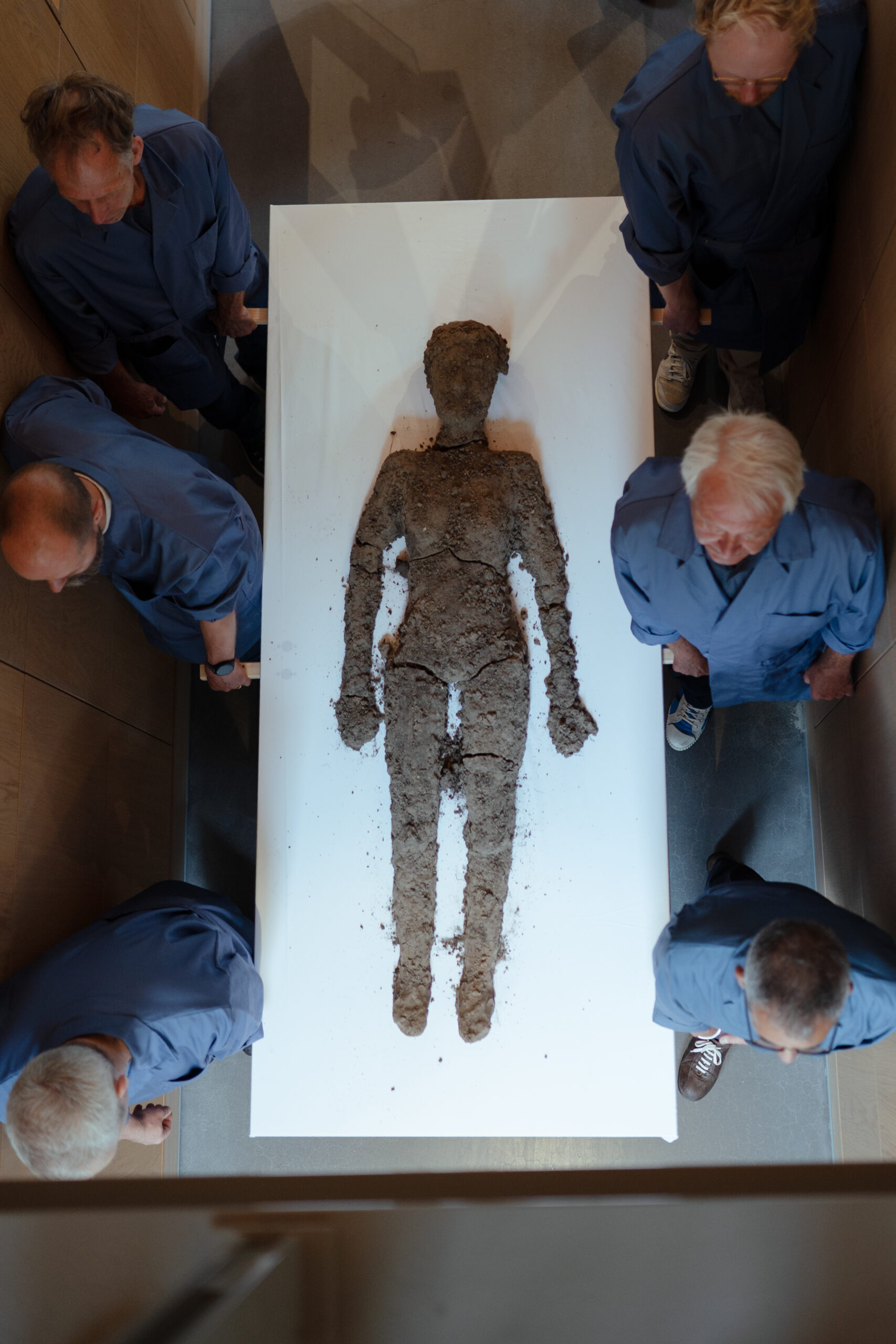
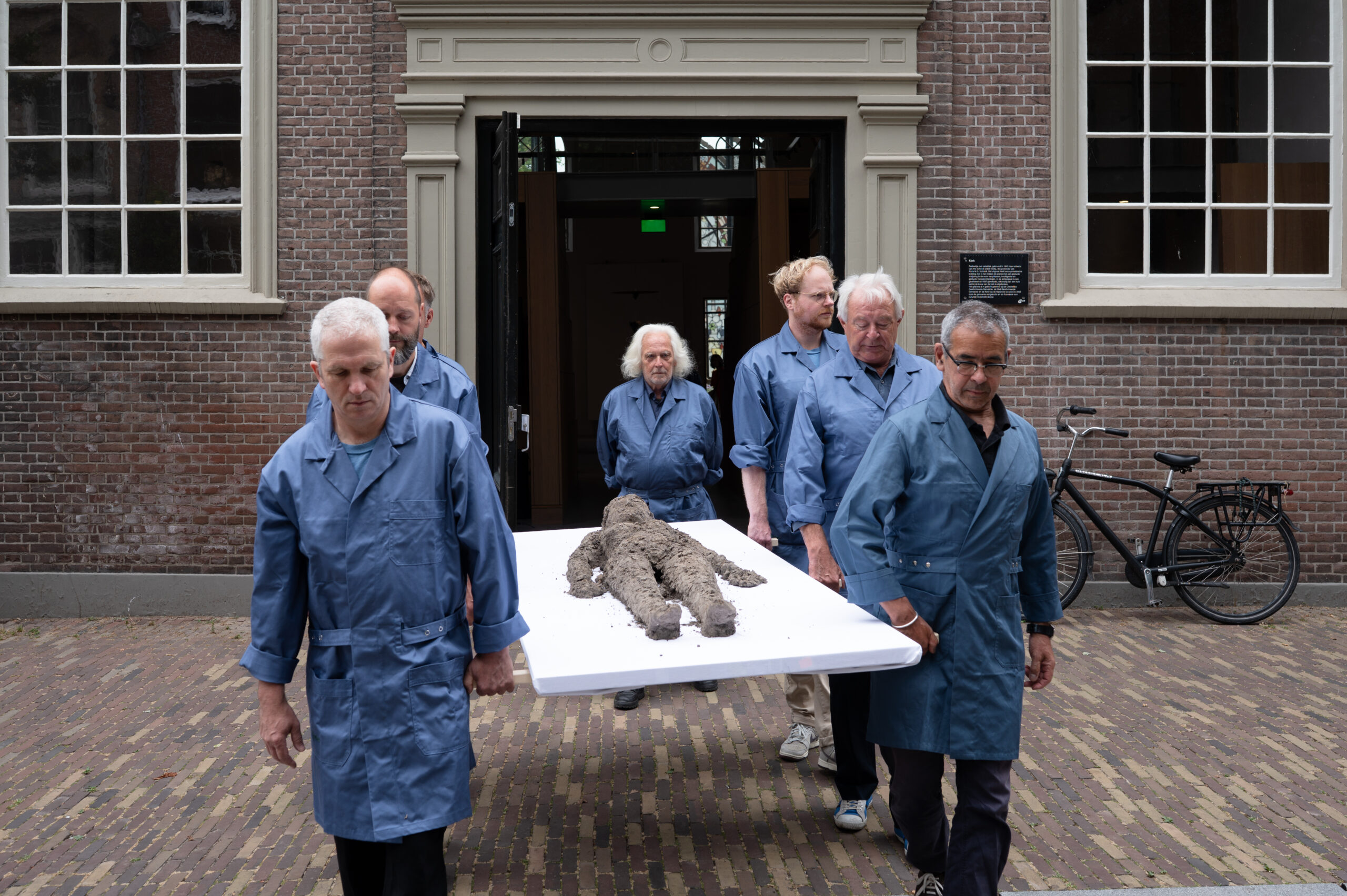
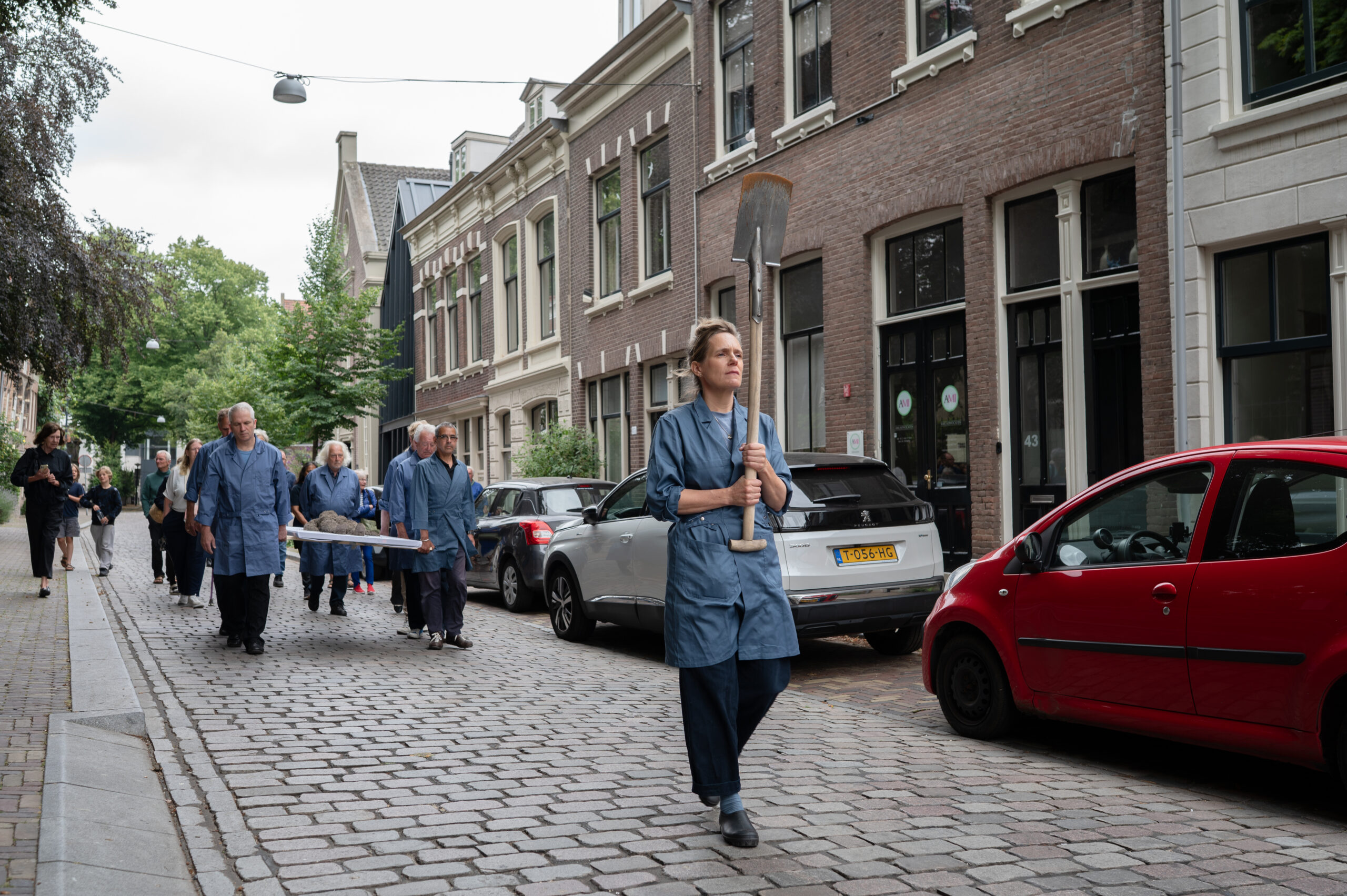
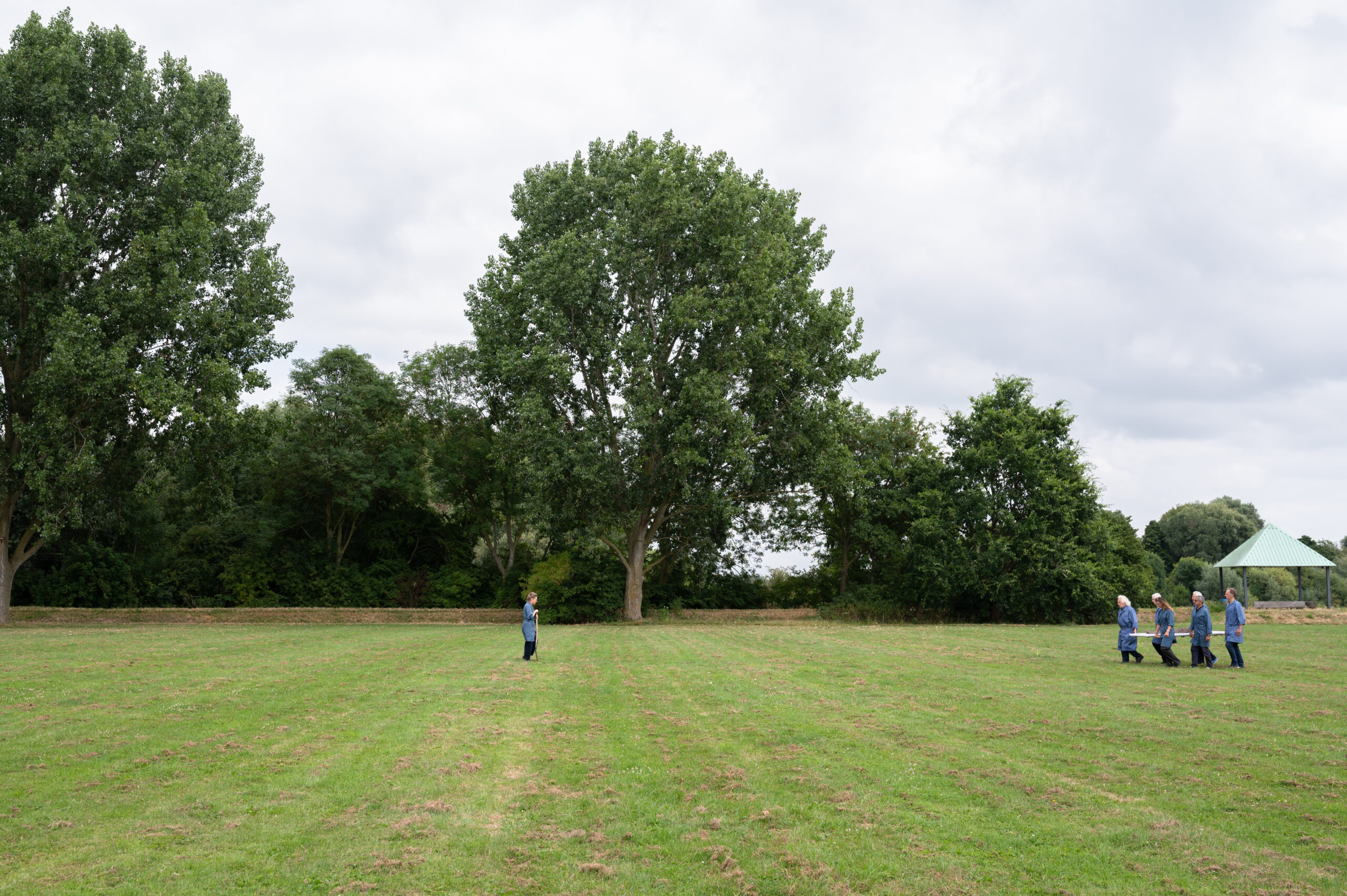
Photos procession made by Sarah van Wingerden
Article in newspaper Trouw, June 22nd 2028